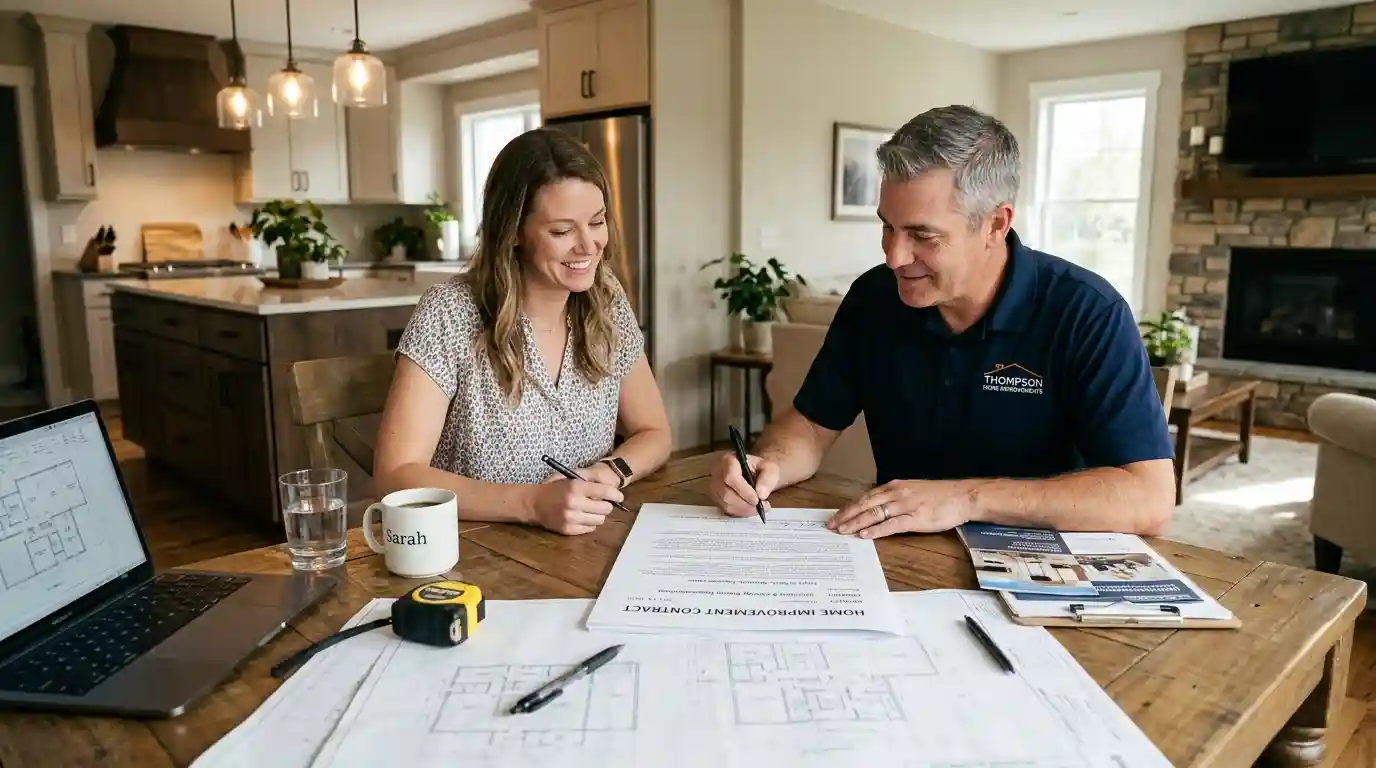
A home improvement contract is a written agreement between a homeowner and a contractor that explains the work to be completed, project costs, payment terms, materials, deadlines, and responsibilities. It helps prevent misunderstandings, protects both parties, and provides a clear record if a dispute arises during a renovation or repair project.
Key Takeaways
- A home improvement contract outlines the terms of a renovation or repair project.
- Written agreements help protect homeowners and contractors from misunderstandings.
- Important details include project scope, costs, payment schedules, and deadlines.
- Different types of contracts suit different home improvement projects.
- Homeowners should check licensing, insurance, warranties, and cancellation rights before signing.
Home Improvement Contract
Introduction
Planning a home renovation or repair project involves more than choosing materials and hiring a contractor. You also need a clear agreement that explains what work will happen, how much it will cost, and when the contractor should finish.
A home improvement contract provides this written record. It helps homeowners understand their responsibilities while giving contractors clear instructions about the project. Whether you are remodeling a kitchen, replacing a roof, installing new flooring, or repairing a bathroom, a well-prepared agreement can prevent costly disagreements.
People often search for home improvement contracts to understand their options, find the right agreement for a project, or learn what details a contractor should include. This guide explains the meaning of the term, explores 10 related contract names, and covers important mistakes to avoid before signing.
What Does “Home Improvement Contract” Mean?
A home improvement contract is a legal agreement between a property owner and a contractor for residential repairs, renovations, upgrades, or remodeling work.
It describes the services the contractor will provide and the conditions under which the project will take place. Depending on the project and state laws, it may include:
- A detailed description of the work.
- Materials, products, and labor costs.
- Project start and completion dates.
- Payment terms and schedules.
- Procedures for approving changes.
- Warranty information.
- Contractor and homeowner responsibilities.
Homeowners commonly use these agreements for kitchen renovations, bathroom upgrades, roofing, painting, plumbing, electrical work, and major repairs.
A signed agreement does not automatically guarantee quality work. However, it creates a written record that both parties can use to understand their obligations.
Why Use Other Ways to Say “Home Improvement Contract”?
Different names describe different types of agreements. Choosing the right term can make communication clearer, especially when discussing a specific renovation or repair service.
Using related terms can help you:
- Describe the exact type of residential project.
- Avoid repeating the same phrase in business communication.
- Find relevant contract templates.
- Explain agreements to homeowners and contractors.
- Distinguish general renovation work from specific repair services.
Important: These alternatives are related terms, not always legally interchangeable. The correct contract depends on the work, location, and applicable state requirements.
10 Best Other Ways to Say “Home Improvement Contract”
The following terms are commonly used in residential construction and renovation. Each has a slightly different meaning, so choose one that matches the actual services and agreement.
1. Home Renovation Agreement
Meaning: A home renovation agreement is a written arrangement between a homeowner and a contractor for remodeling or upgrading a property. It often covers several rooms or major changes to an existing home.
Best For: Professional, Formal
Example 1: We signed a home renovation agreement before starting the kitchen and bathroom upgrades.
Example 2: The homeowner reviewed the renovation agreement with the contractor before approving the project.
Quick Tip: Use this term for larger projects involving improvements to existing spaces.
2. Remodeling Contract
Meaning: A remodeling contract explains the terms of a project that changes or updates an existing room or part of a house. It may cover structural changes, new fixtures, flooring, cabinets, or updated layouts.
Best For: Professional, Formal
Example 1: The remodeling contract includes new kitchen cabinets, countertops, and lighting.
Example 2: Both parties signed the remodeling contract before the bathroom renovation began.
Quick Tip: Choose this phrase when the project focuses on changing an existing space.
3. Home Repair Agreement
Meaning: A home repair agreement outlines the services needed to fix damaged or faulty parts of a property. It usually focuses on maintenance or repairs rather than major renovations.
Best For: Professional, Polite
Example 1: The contractor prepared a home repair agreement for the damaged roof.
Example 2: We reviewed the home repair agreement before approving the plumbing work.
Quick Tip: Use this term for smaller jobs such as roof repairs, plumbing fixes, and electrical maintenance.
4. Construction Agreement
Meaning: A construction agreement establishes the responsibilities of the property owner and the construction professional. It can cover labor, materials, costs, project schedules, and building requirements.
Best For: Professional, Formal
Example 1: The construction agreement explains who will arrange the building permits.
Example 2: The property owner requested a copy of the construction agreement before work began.
Quick Tip: This broader term works for substantial building projects, but specify whether the work involves residential improvements.
5. Contractor Agreement
Meaning: A contractor agreement describes the working relationship between a contractor and the person hiring them. It can outline responsibilities, compensation, deadlines, and service expectations.
Best For: Professional, Formal
Example 1: The contractor agreement explains the payment terms for the flooring installation.
Example 2: We added the project deadline to the contractor agreement before signing.
Quick Tip: Use this phrase when discussing the overall agreement with a hired professional. Make sure the actual document includes the project details.
6. Home Improvement Agreement
Meaning: A home improvement agreement is another name for an agreement covering upgrades, repairs, and improvements to a residential property. It generally describes the work, materials, costs, and conditions.
Best For: Professional, Formal, Polite
Example 1: The home improvement agreement lists the materials needed for the exterior renovation.
Example 2: Please read the home improvement agreement carefully before approving the project.
Quick Tip: This is one of the closest alternatives to the primary keyword and works well in general business communication.
7. Renovation Services Agreement
Meaning: A renovation services agreement describes the professional services a contractor or renovation company will provide. It may cover design coordination, installation, labor, materials, and project management.
Best For: Professional, Formal
Example 1: The renovation services agreement includes the installation of new kitchen flooring.
Example 2: The company sent us a renovation services agreement outlining its responsibilities.
Quick Tip: Use this term when the agreement focuses on the services supplied by a renovation business.
8. Scope-of-Work Agreement
Meaning: A scope-of-work agreement describes the specific tasks, materials, deliverables, and project boundaries. It helps both parties understand what the contractor must complete and what falls outside the agreed work.
Best For: Professional, Formal
Example 1: The scope-of-work agreement identifies every room included in the renovation.
Example 2: We added the new flooring requirements to the scope-of-work agreement.
Quick Tip: This term is especially useful for preventing disagreements about extra work. It may be a separate document or part of a larger contract.
9. Residential Construction Contract
Meaning: A residential construction contract establishes the terms for construction work involving a house or other residential property. It can cover additions, structural improvements, major renovations, and other building projects.
Best For: Professional, Formal
Example 1: The residential construction contract includes plans for the new garage.
Example 2: The builder explained the residential construction contract before requesting a signature.
Quick Tip: Choose this phrase for projects involving significant construction rather than routine household repairs.
10. Work Authorization Agreement
Meaning: A work authorization agreement gives a contractor permission to perform specific services. It may identify the approved work, estimated cost, and conditions for starting a job.
Best For: Professional, Polite
Example 1: The homeowner signed the work authorization agreement before the repair team arrived.
Example 2: We requested a written work authorization agreement for the electrical repairs.
Quick Tip: This term is useful for authorizing specific work, but it may not replace a complete contract when state law requires one.
Comparison Table
| Alternative | Best Used In | Tone |
| Home Renovation Agreement | Major renovations | Formal |
| Remodeling Contract | Room remodeling | Professional |
| Home Repair Agreement | Maintenance and repairs | Polite |
| Construction Agreement | Building projects | Formal |
| Contractor Agreement | Hiring contractors | Professional |
| Home Improvement Agreement | General upgrades | Formal |
| Renovation Services Agreement | Renovation businesses | Professional |
| Scope-of-Work Agreement | Project specifications | Formal |
| Residential Construction Contract | Residential building | Formal |
| Work Authorization Agreement | Approved services | Professional |
Common Mistakes When Using Home Improvement Contract Terms
1. Treating every term as legally identical: A remodeling contract and work authorization agreement may serve different purposes. Choose wording that reflects the actual agreement.
2. Using a general term for specific work: Calling a roof repair a residential construction project may create confusion. Describe the actual service.
3. Leaving out the scope of work: A contract should explain what the contractor will do, which materials they will use, and what the agreed price covers.
4. Ignoring written changes: Verbal changes can cause disagreements. Record changes, additional costs, and revised deadlines in signed written change orders.
5. Signing without reviewing payment terms: Check the deposit, progress payments, final payment, and cancellation conditions before agreeing.
Frequently Asked Questions
1. What is another name for a home improvement contract?
Common alternatives include home improvement agreement, home renovation agreement, remodeling contract, and home repair agreement. The best choice depends on the project. For general residential upgrades, home improvement agreement is usually the closest alternative.
2. Is a home improvement agreement the same as a contract?
The terms are often used similarly in everyday business communication. However, the legal effect depends on the document’s wording, the parties’ agreement, and applicable state law. A document’s title alone does not determine whether it creates an enforceable contract.
3. What should a home improvement contract include?
It should identify the homeowner and contractor, describe the work, list materials, state the total price, and explain payment terms. It should also cover start and completion dates, permits, warranties, and procedures for approving changes.
4. Is a written home improvement contract necessary?
A written agreement is strongly recommended for every project. Some states specifically require written contracts for certain home improvement jobs or dollar amounts. Check your state’s requirements before hiring a contractor.
5. Can I cancel a home improvement contract after signing?
Cancellation rights depend on the circumstances and state law. Certain sales made at a consumer’s home may qualify for a federal three-business-day cancellation period, with exceptions. Some states provide additional protections. Review the cancellation notice before signing.
6. What is the difference between a remodeling contract and a construction contract?
A remodeling contract generally covers changes to an existing property, such as updating a bathroom or kitchen. A construction contract is broader and may cover new structures, additions, or substantial building work.
7. Should I pay the full amount before the contractor finishes?
Generally, avoid paying the entire project cost upfront. Use a written payment schedule tied to completed work or agreed milestones. State laws may limit deposits or advance payments, so check local requirements before making payments.
8. What happens if a contractor does not follow the agreement?
Start by reviewing the signed contract, approved change orders, and payment records. Contact the contractor in writing and explain the problem. Depending on the situation, you may contact your state consumer protection office, licensing board, or an attorney.
Conclusion
Choosing the right home improvement contract terminology helps homeowners and contractors communicate clearly. Terms such as home renovation agreement, remodeling contract, and home repair agreement describe different types of residential projects. However, they should not be treated as automatic legal replacements for one another.
For general renovations, home improvement agreement is a close alternative. For specific repairs, a home repair agreement is more suitable, while a residential construction contract works better for larger building projects.
Before signing any agreement, review the project description, materials, payment schedule, deadlines, warranties, and cancellation terms. Check your state’s contractor licensing and contract requirements as well.
The best agreement is one that clearly explains the work, protects both parties, and puts every important promise in writing.

I am writing about Rick Riordan, a famous American author best known for creating the popular Percy Jackson & the Olympians series. I am highlighting his talent for combining mythology with modern storytelling, which has made his books loved by millions of readers around the world. On namezvibez.com, I am exploring his creative writing style, bestselling novels, and the impact he has had on young readers and fantasy literature.