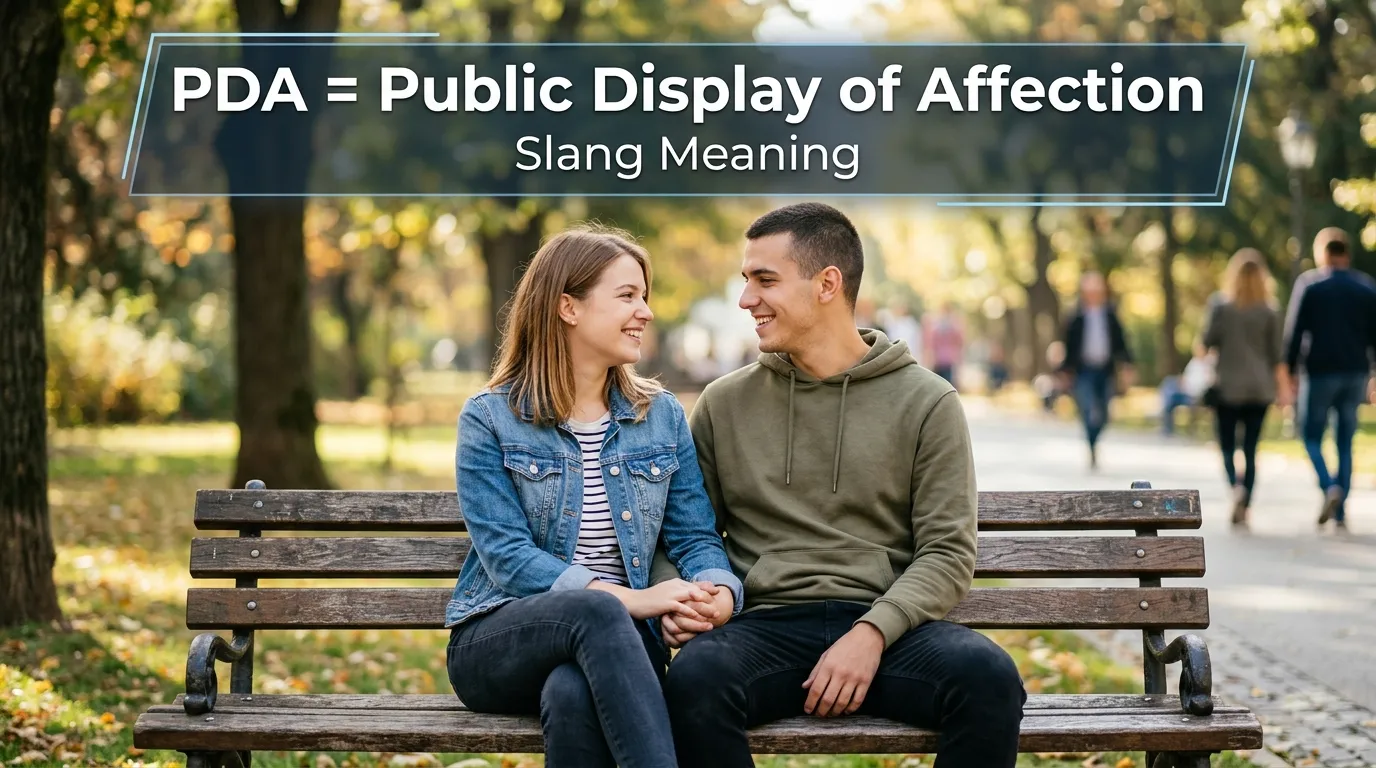
I still remember the first time I saw someone comment “PDA” on a social media post. At first, I had no idea what it meant. I thought it was just another internet abbreviation that everyone understood except me.
Curious, I decided to look it up, and that’s when I learned that PDA stands for Public Display of Affection. Suddenly, many conversations and online comments started making sense.
A few days later, I noticed a couple holding hands and hugging in public. Someone nearby joked about their PDA, and this time I understood exactly what they meant. That experience taught me how important it is to know modern slang terms, especially when they appear so often online and in everyday conversations.
If you’ve ever come across the term PDA and wondered what it means, you’re in the right place. In this guide, I’ll explain the PDA full form, its slang meaning, and how people use it in different situations.
PDA Full Form in Slang
The full form of PDA in slang is Public Display of Affection.
PDA refers to acts of affection that people show toward their romantic partners in public places. These actions can be simple and innocent, such as holding hands, or more intimate, such as kissing.
The term is commonly used in everyday conversations, text messages, social media posts, and relationship discussions.
What Does PDA Mean in a Relationship?
In a relationship, PDA refers to physical or emotional expressions of affection that occur in front of other people.
Many couples use PDA to express love, strengthen emotional bonds, and show appreciation for each other. However, the amount of PDA people are comfortable with varies greatly.
For some couples, PDA may involve nothing more than holding hands. For others, it may include hugging, cuddling, or kissing in public.
Why Do Couples Engage in PDA?
There are many reasons why couples engage in PDA.
Expressing Love
Public affection allows partners to express their feelings openly and naturally.
Building Emotional Security
Simple gestures can help partners feel valued and appreciated.
Celebrating a Relationship
Some couples enjoy sharing their happiness and connection with the people around them.
Strengthening Bonding
Physical affection often strengthens emotional intimacy and trust between partners.
Common Examples of PDA
PDA can take many forms, ranging from subtle gestures to more obvious displays of affection.
Mild PDA
- Holding hands
- Linking arms
- Walking close together
- Gentle touches
- Sitting close to each other
Moderate PDA
- Hugging
- Forehead kisses
- Kissing on the cheek
- Cuddling
- Putting an arm around a partner
Intense PDA
- Extended kissing
- Excessive physical touching
- Highly intimate behavior in public spaces
The acceptability of these actions often depends on the setting and local culture.
PDA Meaning in Texting and Social Media
The abbreviation PDA is frequently used online.
In Text Messages
Someone might say:
- They show a lot of PDA when they go out.
- I am not a fan of PDA.
On Social Media
Couples may display digital PDA through:
- Romantic photos
- Love-filled captions
- Anniversary posts
- Relationship updates
- Public declarations of affection
This online behavior is often called digital PDA.
Different Types of PDA
Physical PDA
Physical affection shown in public.
Examples include:
- Holding hands
- Hugging
- Kissing
- Cuddling
Verbal PDA
Expressing affection through words.
Examples include:
- Compliments
- Pet names
- Public expressions of love
Emotional PDA
Showing emotional support in front of others.
Examples include:
- Encouragement
- Comforting a partner
- Celebrating achievements together
Digital PDA
Public affection displayed online.
Examples include:
- Romantic posts
- Love messages
- Couple photos
- Relationship status updates
Is PDA Good or Bad?
PDA is neither completely good nor completely bad. It depends on the situation and personal preferences.
Benefits of PDA
- Strengthens emotional connections
- Helps partners feel appreciated
- Can improve relationship satisfaction
- Creates a sense of security
Drawbacks of PDA
- May make others uncomfortable
- Can be inappropriate in certain settings
- May clash with cultural expectations
- Some people prefer private affection
Balance is usually the key.
How Much PDA Is Appropriate?
Appropriate PDA depends on the environment and social norms.
Usually Acceptable
- Holding hands
- Brief hugs
- Quick kisses
- Walking arm in arm
Potentially Inappropriate
- Excessive kissing
- Intimate touching
- Behavior that disrupts public comfort
Understanding your surroundings helps ensure your affection remains respectful.
Cultural Views on PDA
Attitudes toward PDA vary around the world.
More Accepting Cultures
Some countries view public affection as a normal part of daily life.
More Conservative Cultures
Other societies prefer affection to remain private and may consider public displays inappropriate.
Why Culture Matters
Understanding local customs can help avoid misunderstandings and show respect for social norms.
PDA and Relationship Psychology
Psychologists often view healthy PDA as one way couples express attachment and emotional closeness.
What PDA Can Indicate
- Comfort with a partner
- Emotional connection
- Relationship satisfaction
What PDA Does Not Automatically Mean
PDA does not necessarily prove that a relationship is perfect. Some highly affectionate couples may still experience challenges, while private couples can have strong and healthy relationships.
Signs of Excessive PDA
Sometimes PDA can become excessive.
Common signs include:
- Constant physical contact
- Ignoring social boundaries
- Making others visibly uncomfortable
- Inappropriate behavior in professional settings
Healthy relationships typically balance affection with respect for others.
PDA Etiquette Tips
If you choose to show affection in public, consider these tips:
- Respect local customs
- Consider the setting
- Be mindful of other people
- Avoid overly intimate behavior
- Pay attention to your partner’s comfort level
Good PDA should feel natural and respectful.
Common Myths About PDA
PDA Means a Relationship Is Perfect
Not necessarily. Public affection does not reveal everything about a relationship.
PDA Is Always Inappropriate
Many forms of PDA are widely accepted and considered normal.
PDA Is Only Physical
PDA can also include verbal and digital expressions of affection.
Every Couple Must Show PDA
Some couples prefer private expressions of love, and that is perfectly normal.
PDA Slang Examples in Sentences
Here are some examples of PDA used in conversation:
- That couple loves showing PDA wherever they go.
- I don’t mind a little PDA, but excessive affection makes me uncomfortable.
- Their vacation photos were full of digital PDA.
- My friend prefers to keep PDA to a minimum.
- They held hands throughout the event, which is a common form of PDA.
Other Meanings of PDA
Although PDA commonly means Public Display of Affection in slang, it can have other meanings.
Personal Digital Assistant
An electronic device used for managing schedules and information.
Patent Ductus Arteriosus
A medical condition involving the heart and blood vessels.
Always consider the context to determine the intended meaning.
FAQs:
What is the full form of PDA in slang?
PDA stands for Public Display of Affection.
What does PDA mean in a relationship?
It refers to expressions of affection shown publicly between romantic partners.
Is holding hands considered PDA?
Yes. Holding hands is one of the most common and socially accepted forms of PDA.
Is PDA good for relationships?
Moderate PDA can strengthen emotional bonds and improve relationship satisfaction.
What is digital PDA?
Digital PDA refers to public expressions of affection shared online through posts, photos, captions, and messages.
Why do some people dislike PDA?
Some people prefer privacy, while others may find public affection uncomfortable or culturally inappropriate.
Conclusion
The PDA full form in slang is Public Display of Affection. It describes the many ways couples express affection in public, from holding hands and hugging to sharing romantic moments online.
While opinions about PDA vary from person to person and culture to culture, respectful and appropriate displays of affection can help strengthen relationships and foster emotional connection.
Understanding PDA, its different forms, and the social norms surrounding it can help you navigate relationships with confidence and respect for others.

I am writing about Rick Riordan, a famous American author best known for creating the popular Percy Jackson & the Olympians series. I am highlighting his talent for combining mythology with modern storytelling, which has made his books loved by millions of readers around the world. On namezvibez.com, I am exploring his creative writing style, bestselling novels, and the impact he has had on young readers and fantasy literature.