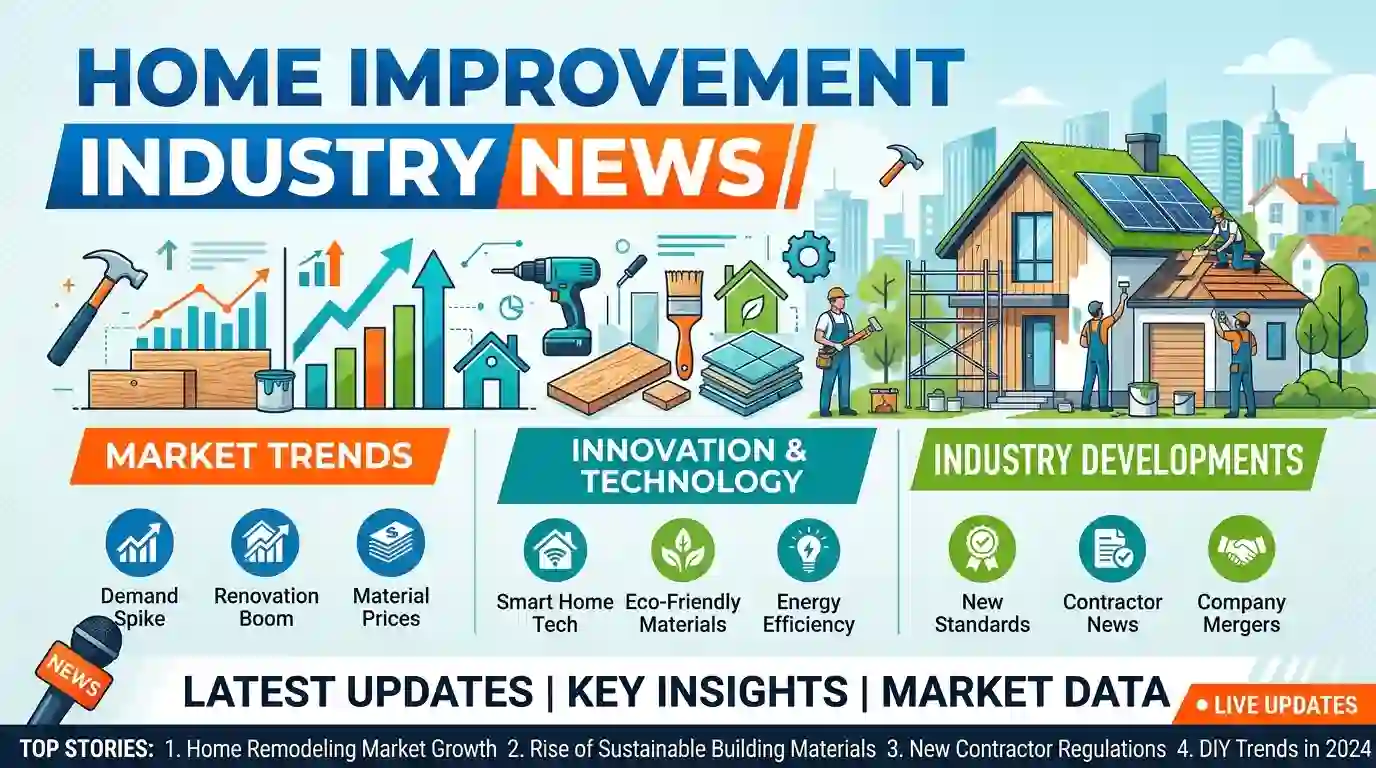
Home improvement industry news covers the latest developments in home remodeling, renovation costs, building materials, contractor businesses, retail sales, and housing trends. Homeowners, contractors, retailers, and investors follow these updates to understand market changes, plan projects, manage costs, and identify opportunities in the U.S. home improvement market.
Key Takeaways
- Home improvement industry news helps readers understand changes in remodeling demand, costs, and consumer spending.
- Interest rates, housing conditions, and household budgets influence renovation decisions.
- Energy efficiency, aging-in-place upgrades, and home maintenance remain important areas to watch.
- Contractors and retailers need to track material prices, labor availability, and customer preferences.
- Reliable industry reporting helps homeowners and businesses make better-informed decisions.
Home Improvement Industry News
Introduction
The U.S. home improvement industry includes everything from small DIY projects and routine repairs to major kitchen renovations, bathroom remodels, roofing replacements, and energy-efficient upgrades. Homeowners, contractors, manufacturers, and retailers all depend on this market, which responds to changes in housing conditions, household income, financing costs, and consumer preferences.
Following home improvement industry news helps readers understand what is happening across the remodeling and renovation market. It can also reveal why project costs change, which products are gaining attention, and how contractors are adapting to new customer expectations.
For homeowners, these updates can help with budgeting and project timing. Contractors can use industry developments to plan services, manage expenses, and understand demand. Retailers and suppliers can follow changes in product sales, distribution, and building materials.
This guide explains the major developments worth watching, the trends shaping the industry, and how to find reliable information without confusing market forecasts with confirmed results.
What Does “Home Improvement Industry News” Mean?
Home improvement industry news refers to reporting, research, announcements, and market analysis related to repairing, renovating, upgrading, and maintaining residential properties.
It covers several parts of the industry, including:
- Remodeling: Kitchen renovations, bathroom upgrades, room additions, and whole-home projects.
- Building materials: Changes in lumber, flooring, roofing, insulation, and other product costs.
- Retail and products: Business developments involving home improvement stores, manufacturers, and suppliers.
- Contractor businesses: Labor availability, project demand, business costs, and industry regulations.
- Housing and consumer spending: Economic conditions that influence homeowners’ renovation decisions.
People use this information to make purchasing decisions, prepare business plans, compare market opportunities, and understand changes in the remodeling industry.
Why Follow Home Improvement Industry News?
The home improvement market changes as homeowners respond to borrowing costs, property values, household budgets, and maintenance needs. Following credible reporting helps readers separate meaningful developments from short-lived trends.
Here are the main benefits:
- Plan renovation budgets: Track material prices, labor costs, and financing conditions.
- Identify business opportunities: Understand which services and customer groups may offer growth potential.
- Stay competitive: Learn about new products, building methods, and customer expectations.
- Make informed decisions: Compare industry forecasts with actual market data.
- Understand local demand: Recognize that renovation activity can vary considerably by state and region.
Latest Home Improvement Industry News and Market Developments
Market update: October 29, 2026. Figures below reflect the publication dates of the cited reports.
1. Remodeling Spending Faces a Slower Growth Outlook
One of the most important recent developments is the slowdown in projected home improvement spending. On October 22, 2026, Harvard University’s Joint Center for Housing Studies reported that annual spending on home improvements and repairs is expected to remain relatively flat through late 2027.
Its latest Leading Indicator of Remodeling Activity projects year-over-year growth of just 1.5% by the third quarter of 2027, with annual spending expected to hover around $525 billion. The report points to weak building-product retail spending, stagnant remodeling permits, and softness in the broader housing market.
Joint Center for Housing Studies+1
Why it matters:
Contractors may need to focus on essential repairs, clear project estimates, and stronger customer communication rather than assuming that demand will grow quickly.
2. Remodeler Confidence Remains Positive
The National Association of Home Builders (NAHB) reported a Remodeling Market Index (RMI) reading of 62 for the third quarter of 2026, published October 8. The index rose one point from the previous quarter.
An RMI above 50 means more surveyed remodelers view market conditions as good than poor. However, the result does not mean every contractor is experiencing growth. Respondents continue to report material-cost pressures, labor shortages, and customers who hesitate because of economic uncertainty.
NAHB+1
Why it matters:
Business confidence remains relatively stable, but contractors should monitor incoming leads, project backlogs, and actual revenue instead of relying on a national index alone.
3. Homeowners Continue to Face Cost Pressures
Material and labor expenses remain important concerns for remodeling businesses. NAHB’s second-quarter 2026 report found that 74% of surveyed remodelers said their suppliers had raised material prices since March, with an average reported increase of 6.7%.
NAHB
These figures reflect the survey period and should not be treated as a current price increase for every material or location. Actual costs vary by product, supplier, project size, and region.
Why it matters:
Homeowners should request itemized estimates and ask how long quoted prices remain valid. Contractors can reduce disputes by explaining allowances, possible price changes, and payment schedules before work begins.
4. Regional Differences Create Different Business Opportunities
Remodeling demand is not evenly distributed across the United States. NAHB’s August 2026 analysis of first-quarter activity identified California, Texas, and Florida as the three largest states by remodeling market share.
California accounted for 8% of the market, Texas for 7.3%, and Florida for 5.5%. The same analysis identified Michigan, Virginia, North Carolina, Alabama, and Washington among the states with the largest increases in remodeling spending during that period.
NAHB
Why it matters:
A national forecast may not reflect local conditions. Contractors and suppliers should compare national reports with regional building permits, local competition, and their own customer inquiries.
5. Aging Homes Support Long-Term Remodeling Demand
Older homes need ongoing repairs, updated systems, and improvements that make daily living safer and more comfortable. NAHB identifies the aging housing stock and homeowners’ desire to remain in their homes as important long-term drivers of remodeling demand.
NAHB+1
Projects may include accessible bathrooms, better lighting, safer entrances, replacement windows, and updated electrical systems. These needs can create opportunities for contractors who specialize in home safety and maintenance.
6. Essential Repairs Compete With Large Renovations
When budgets feel tight, homeowners may postpone expensive kitchen makeovers or room additions while continuing to address leaking roofs, plumbing failures, and other urgent problems.
This distinction matters to both contractors and retailers. Businesses that offer transparent estimates, repair services, and clearly defined project options may be better positioned to serve customers who are cautious about major spending.
HousingWire+1
Other Important Home Improvement Trends to Watch
Three additional areas deserve attention as the industry develops:
- Energy efficiency: Insulation, air sealing, efficient heating and cooling systems, and suitable window upgrades can help homeowners manage energy use. Actual savings depend on the home and local energy costs.
- Digital tools: Online estimates, scheduling software, customer relationship management systems, and project-management apps can help contractors communicate with customers and organize work.
- Product innovation: Durable materials, water-saving fixtures, and accessible home designs may influence purchasing decisions. Buyers should compare product specifications, warranties, and installation requirements rather than relying on marketing claims.
These are trends to monitor, not guarantees that demand or profits will rise in every market.
Common Mistakes When Following Industry News
1. Treating forecasts as confirmed results. A projection describes an expected outcome, not a completed market result.
2. Ignoring publication dates. Older reports may no longer reflect current prices, sales, or business conditions.
3. Applying national data to every location. Regional housing conditions, labor costs, and weather-related needs can differ.
4. Relying on headlines alone. Read the underlying report to understand its sample, measurement period, and limitations.
5. Confusing industry growth with individual business success. A growing market does not guarantee that a particular contractor or retailer will become more profitable.
Frequently Asked Questions
1. Where can I find reliable home improvement industry news?
Start with the National Association of Home Builders, Harvard’s Joint Center for Housing Studies, the Home Improvement Research Institute, and established housing trade publications. These sources provide market reports, industry surveys, and economic analysis. Check the publication date and original research before using a statistic in a business decision.
2. What are the biggest home improvement industry trends in 2026?
Major developments include slower projected remodeling-spending growth, continued pressure from material and labor costs, demand for essential repairs, and interest in making homes safer and more efficient. The strength of each trend varies by location, customer budget, and project type, so local data remains important.
3. Is the U.S. home improvement industry growing?
The market remains substantial, but growth is uneven. Harvard’s October 2026 outlook expects annual spending on home improvements and repairs to remain relatively flat through late 2027. This suggests a slower market rather than a complete halt in renovation activity.
Joint Center for Housing Studies
4. How do interest rates affect home renovation demand?
Higher borrowing costs can make home equity loans, credit lines, and other financing options more expensive. Some homeowners respond by postponing large projects or choosing smaller upgrades. Others renovate because moving would require purchasing a different home with a potentially less favorable mortgage.
5. Which home improvement projects remain important during a slow market?
Necessary repairs, roof replacements, plumbing work, electrical upgrades, and maintenance often remain priorities because homeowners cannot postpone every problem. Accessibility improvements and energy-saving upgrades may also attract interest, although budgets and local conditions influence which projects move forward.
6. How can contractors use industry news to grow their businesses?
Contractors can use market reports to monitor customer demand, understand cost pressures, identify service opportunities, and plan staffing. They should compare national findings with their own lead volume, conversion rates, average project value, and local competition before changing prices or expanding services.
7. How often should I check home improvement industry news?
A weekly review is useful for major business announcements and trade developments. Monthly or quarterly reviews can help you track economic indicators, material costs, and remodeling forecasts. For a major project or investment, consult the latest relevant report rather than relying on a general news summary.
8. What should homeowners check before starting a renovation?
Set a realistic budget, obtain detailed written estimates, verify contractor licensing and insurance requirements in your area, and check whether permits are necessary. Compare materials based on quality, installation costs, and warranties. Also, keep a contingency fund for unexpected issues discovered during construction.
Conclusion
Following home improvement industry news helps homeowners and professionals understand the forces shaping the U.S. remodeling market. Current reports point to slower spending growth, ongoing cost pressures, and continued demand for essential repairs, even as some customers delay larger renovation projects.
For homeowners, the best approach is to compare estimates, plan budgets carefully, and prioritize improvements that meet their needs. Contractors should monitor local demand, manage expenses, and communicate clearly about project costs and timelines. Retailers and suppliers can benefit from tracking consumer spending and regional market conditions.
Reliable information matters more than dramatic headlines. Use research from established industry organizations, check publication dates, and distinguish forecasts from confirmed results. The most useful home improvement industry news is information that helps you make a better decision, whether you are planning a renovation, managing a contracting business, or studying the housing market.

I am a fan of famous American author James Patterson and I love sharing interesting information about him on my website namezvibez.com. I am inspired by his incredible storytelling and the many bestselling books he has written. I am creating content to help readers quickly learn about his life, career, and achievements in a simple and engaging way. On namezvibez.com, I share short and useful details about popular authors and personalities. ✍️📚