I was having coffee with my old friend Sam after his third job interview that month went nowhere. “Honestly, I feel jaded, even the good postings look fake to me now,” he muttered into his cup. I stirred my drink and said, “I hear that word a lot, but I think it means more than just being tired.” He nodded slowly and replied, “It is like my enthusiasm ran out before my effort did.” I promised him I would look into the word properly, because it described so many people I knew. Here is the honest jaded meaning I found, starting right below.
🧠 What Does Jaded Mean in Text?
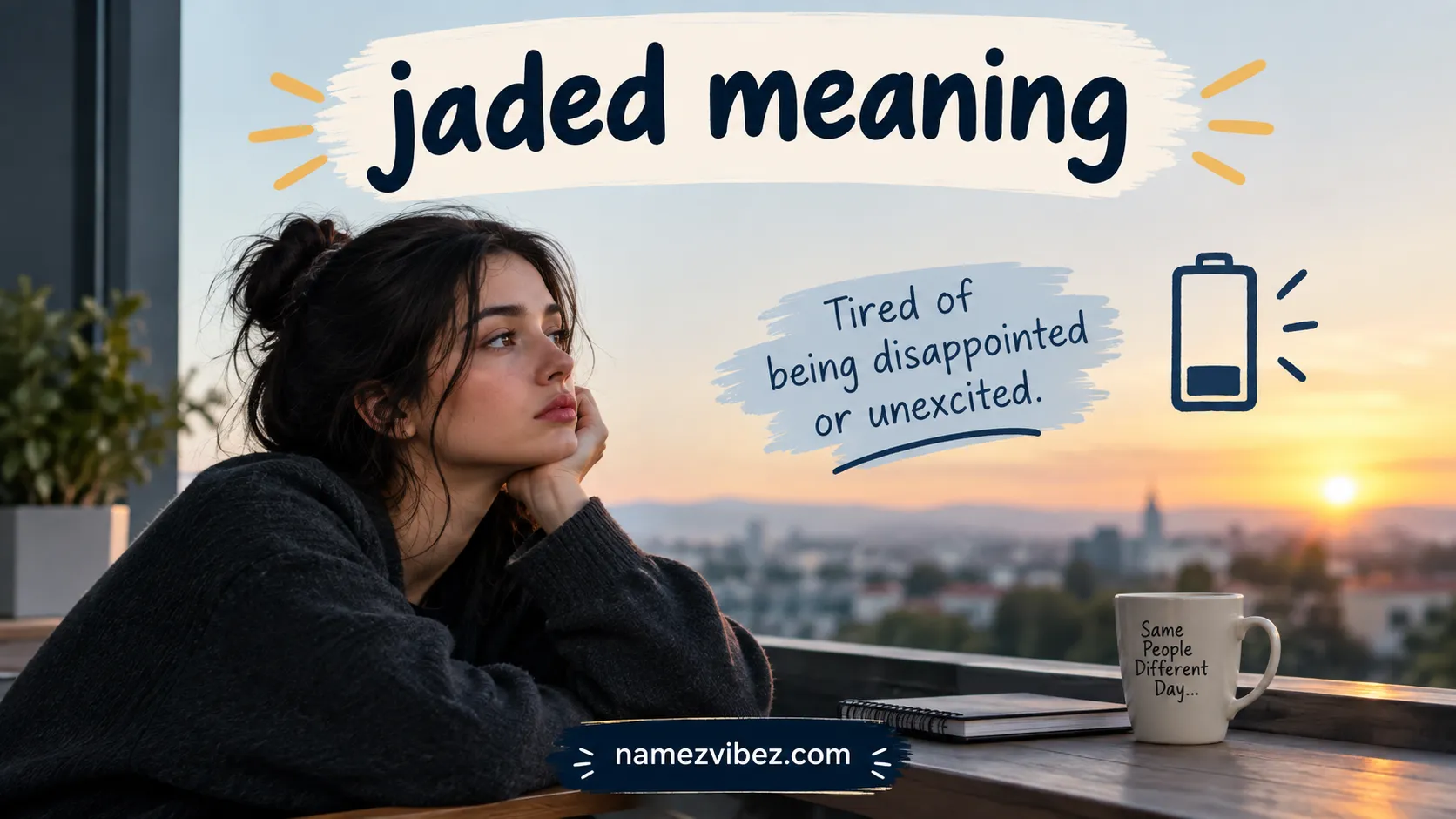
The word jaded means feeling tired, bored, or less interested because you have experienced too much of something. It often describes a loss of excitement after repeated disappointment.
For example:
“After so many bad relationships, she felt jaded about love.”
This means she had experienced so many disappointments that she no longer felt excited or hopeful about love.
Jaded does not always mean physically tired. It usually describes your mind or emotions. You may feel jaded after dealing with the same problems again and again.
🐴 Origin of the Word Jaded
The story behind jaded is one of the most interesting in English, and it starts with horses.
In Middle English, a jade was a worn-out, broken-down horse, one that had been ridden too hard for too long. To “jade” a horse meant to exhaust it through overwork.
Around the late 1500s, people began applying the word to humans. Just as an overworked horse loses its spirit, a person who has endured too much loses enthusiasm.
Language historians note the word may trace back to the Old Norse jalda, meaning “mare.” So when you say you feel jaded, you are comparing yourself to a tired old horse that has carried too many riders.
The green gemstone called jade is completely unrelated. It is a fun coincidence that the two words look and sound the same.
💡 Jaded Meaning in Simple Words
Emotionally Tired
Meaning: Worn out inside, not just sleepy.
Bored With the Same Things
Meaning: Nothing feels new or exciting anymore.
Disappointed After Many Experiences
Meaning: Hope has faded because things kept going wrong.
Less Hopeful or Excited Than Before
Meaning: Optimism has been replaced by low expectations.
No Longer Easily Impressed
Meaning: Things that once amazed you now feel ordinary.
Cynical From Experience
Meaning: Starting to doubt people’s motives because of past letdowns.
In short: Jaded = Emotionally worn out = No longer excited or hopeful because of repeated experiences.
🤔 Is Jaded a Slang Word?
No, jaded is not exactly slang. It is a standard English adjective. People use it in everyday conversations, text messages, social media, books, and even formal writing.
You can use it when talking about yourself, a friend, work, relationships, or life experiences.
It has been in the dictionary for over 400 years, which makes it one of the older emotion words still in daily use.
📱 Where Is Jaded Commonly Used?
The word jaded can appear in many everyday situations. It is especially useful when you want to describe emotional exhaustion or lost enthusiasm.
💬 Texting
Meaning: Talking about feeling tired of problems or drama.
📱 Social Media
Meaning: Sharing thoughts about life, relationships, or disappointment.
💔 Relationship Chats
Meaning: Describing someone who has lost faith in love.
💼 Work Conversations
Meaning: Talking about feeling tired of the same job or routine.
🎮 Gaming Chats
Meaning: Describing someone who has lost interest after playing too much.
📝 Blogs and Captions
Meaning: Expressing emotional tiredness or disappointment.
Is Jaded Casual or Formal?
Meaning: Jaded works in both casual and formal English. Journalists, novelists, and managers all use it.
💬 Examples of Jaded in Conversation
Here are 10 natural examples:
“After two years of the same routine, I was feeling jaded.”
Meaning: Repetition drained all excitement from daily life.
“The concert should satisfy even the most jaded critic.”
Meaning: Even someone hard to impress should enjoy it.
“Years of office politics left him jaded.”
Meaning: Workplace games destroyed his enthusiasm.
“She gave a jaded laugh at the empty promise.”
Meaning: Her laugh showed she no longer believed the words.
“Traveling constantly made her jaded about new cities.”
Meaning: Too much travel removed the thrill of exploring.
“He sounded jaded after a decade in customer service.”
Meaning: Ten years of complaints wore him down.
“Fans grew jaded after years of broken promises.”
Meaning: Repeated letdowns killed their excitement.
“Don’t get jaded, the right opportunity will come.”
Meaning: Advice to protect your hope and enthusiasm.
“The jaded detective had seen it all before.”
Meaning: Experience made him hard to surprise.
“I am too jaded for another dating app.”
Meaning: Past dating disappointments removed all interest.
⚖️ Jaded vs Cynical vs Burnt Out
These three words overlap, but they are not identical.
Jaded
Meaning: Lost enthusiasm from too much experience. You are bored and unimpressed, not necessarily angry.
Cynical
Meaning: Distrustful of people’s motives. You expect selfishness and dishonesty behind every action.
Burnt Out
Meaning: Physically and mentally exhausted from prolonged stress. You need rest, not just novelty.
A jaded person is bored. A cynical person is suspicious. A burnt out person is exhausted. You can be all three at once, but each word points at something different.
🌱 How to Stop Feeling Jaded
Feeling jaded is common, and it is usually temporary. Here are practical ways people refresh their outlook:
Take a Real Break
Meaning: Step away from the routine that wore you down, even for a short time.
Try Something New
Meaning: Novelty rebuilds excitement. A new hobby, route, or skill can reset your interest.
Lower the Bar Temporarily
Meaning: Expect less for a while. Small wins feel bigger when expectations are realistic.
Talk About It
Meaning: Naming the feeling with a friend or journal often loosens its grip.
Remember the Beginning
Meaning: Recall what excited you at the start. The original spark is often still there.
🕓 When to Use and When Not to Use Jaded
Use it when: Describing emotional weariness from repetition, disappointment, or overexposure in work, relationships, or hobbies.
Avoid it when: You mean simple physical tiredness. Say “exhausted” or “sleepy” instead, so the emotional meaning stays clear.
Also avoid labeling other people as jaded to their face. It can sound dismissive, as if their feelings do not matter.
🔄 Similar Words or Alternatives
Cynical
Meaning: Distrustful and doubting, especially about people’s motives.
Disillusioned
Meaning: Disappointed after discovering the truth was less pleasant than expected.
Weary
Meaning: Very tired, in body or mind, from long effort.
Blasé
Meaning: Unimpressed because of overfamiliarity. A fancier cousin of jaded.
World-weary
Meaning: Tired of life’s struggles after long experience. More literary than jaded.
The Two Core Meanings of Jaded
The Oxford English Dictionary gives jaded two general senses, both dating from the 1600s and both still in use today. The first is worn out or exhausted, as in tired soldiers after a long march. The second is dulled or sated by continual use or indulgence, as in a traveler who has seen so many famous sights that none of them impress her anymore. Modern dictionaries add a third shade of meaning. Merriam-Webster defines jaded as made dull, apathetic, or cynical by experience or surfeit, giving examples like jaded network viewers and jaded voters. So the word covers a spectrum from simple exhaustion to a hardened, hard to impress attitude, and the exact shade depends on context.
Origin of the Word Jaded
The story behind jaded is one of the most interesting in English, and it starts with horses. In Middle English, a jade was a worn out, broken down horse, one that had been ridden too hard for too long. To jade a horse meant to exhaust it through overwork. Around the late 1500s, people began applying the word to humans. Just as an overworked horse loses its spirit, a person who has endured too much loses enthusiasm.
Language historians trace the word further back. The Old Norse word jalda meant mare, which may be the distant ancestor of jade. There is also a forgotten chapter in the word history. Around 1560, jade became a term of reprobation applied to a woman, used playfully like hussy or minx, a sense recorded by the Oxford English Dictionary. The verb form had its own odd meanings, including to make a fool of someone. Curiously, the unrelated word jape, meaning a joke or trick, shares a strangely similar background, though scholars say the two are not connected.
The green gemstone called jade is completely unrelated. It is a fun coincidence that the two words look and sound the same. The gemstone name comes from the French phrase for a stone once believed to cure kidney pain, and it actually covers two different minerals, nephrite and jadeite. So when you say you feel jaded, you are comparing yourself to a tired old horse, not to a precious stone.
Jaded Meaning in Simple Words
Emotionally tired: worn out inside, not just sleepy. Your feelings need rest more than your body does.
Bored with the same things: nothing feels new or exciting anymore because you have seen it all before.
Disappointed after many experiences: hope has faded because things kept going wrong again and again.
Less hopeful than before: optimism has been replaced by low expectations and guarded feelings.
No longer easily impressed: things that once amazed you now feel ordinary and predictable.
Cynical from experience: starting to doubt people’s motives because of past letdowns and broken promises.
In short: jaded equals emotionally worn out, which means no longer excited or hopeful because of repeated experiences.
Jaded vs Cynical vs Burnt Out
These three words overlap, but they are not identical, and mixing them up is one of the most common mistakes learners make.
Jaded means lost enthusiasm from too much experience. You are bored and unimpressed, not necessarily angry. A jaded music fan has heard every song and feels nothing at a concert. The core feeling is boredom and flatness.
Cynical means distrustful of people’s motives. You expect selfishness and dishonesty behind every action. A cynical voter assumes every promise is a lie. The core feeling is suspicion.
Burnt out means physically and mentally exhausted from prolonged stress. You need rest, not just novelty. A burnt out nurse can barely get through a shift. The core feeling is exhaustion.
A simple way to remember the trio: a jaded person is bored, a cynical person is suspicious, and a burnt out person is exhausted. You can be all three at once, but each word points at something different. Jaded is about lost spark, cynical is about lost trust, and burnt out is about lost energy.
Common Collocations With Jaded
Native speakers pair jaded with certain words again and again. Learning these collocations will make your English sound natural.
Grow jaded: to slowly become jaded over time. Example: People often grow jaded with repetitive tasks.
Jaded by experience: made jaded through what you have lived through. Example: She felt jaded by experience after years in the industry.
Jaded outlook: a generally weary way of seeing the world. Example: His jaded outlook made it hard to stay optimistic.
Jaded and weary: a common pairing that stresses both boredom and tiredness. Example: After the long journey, they were jaded and weary.
Jaded palate: used for food and entertainment, meaning nothing tastes or feels special anymore. Example: Years of fine dining left him with a jaded palate.
The Jaded Word Family
Jadedly is the adverb form. It describes doing something in a tired or bored way because of too much experience. Example: She smiled jadedly after hearing the same story again.
Jadedness is the noun form. It names the state of being tired or bored because you have experienced too much of something. Example: Her jadedness with city life made her want to move to the countryside.
The verb jade still exists, though it is rare. To jade means to wear out or exhaust. Example: The endless meetings jaded the whole team.
Antonyms of Jaded
If jaded means worn out and unimpressed, its opposites describe freshness and excitement. Useful antonyms include energetic, vibrant, excited, fresh, enthusiastic, unspoiled, and eager. A child seeing snow for the first time is the opposite of jaded. When you want to say someone still feels wonder, reach for one of these instead.
12 Real Examples of Jaded in Sentences
After two years of the same routine, I was feeling jaded. Repetition drained all excitement from daily life.
The concert should satisfy even the most jaded critic. Even someone hard to impress should enjoy it.
Years of office politics left him jaded. Workplace games destroyed his enthusiasm.
She gave a jaded laugh at the empty promise. Her laugh showed she no longer believed the words.
Traveling constantly made her jaded about new cities. Too much travel removed the thrill of exploring.
He sounded jaded after a decade in customer service. Ten years of complaints wore him down.
Fans grew jaded after years of broken promises. Repeated letdowns killed their excitement.
Do not get jaded, the right opportunity will come. Advice to protect your hope and enthusiasm.
The jaded detective had seen it all before. Experience made him hard to surprise.
I am too jaded for another dating app. Past dating disappointments removed all interest.
Success came so fast that he felt jaded by thirty. Too much good fortune dulled his sense of wonder.
Her jaded tone told me she had stopped believing the excuses. The flat voice revealed lost trust.
Where You Will Hear Jaded
The word jaded appears in many everyday situations. It is especially useful when you want to describe emotional exhaustion or lost enthusiasm.
Texting: talking about feeling tired of problems or drama with friends.
Social media: sharing thoughts about life, relationships, or disappointment in captions.
Relationship chats: describing someone who has lost faith in love after bad experiences.
Work conversations: talking about feeling tired of the same job, routine, or office culture.
Gaming chats: describing someone who has lost interest after playing too much.
Journalism and books: writers use jaded for voters, critics, travelers, and detectives who have seen too much.
Is jaded casual or formal? It works in both. Journalists, novelists, and managers all use it, and it has been in the dictionary for over 400 years, which makes it one of the older emotion words still in daily use.
When to Use Jaded and When to Avoid It
Use it when describing emotional weariness from repetition, disappointment, or overexposure in work, relationships, or hobbies. It fits perfectly when the problem is lost spark rather than lost sleep.
Avoid it when you mean simple physical tiredness. Say exhausted or sleepy instead, so the emotional meaning stays clear. Also avoid labeling other people as jaded to their face. It can sound dismissive, as if their feelings do not matter. Saying I feel a bit jaded lately invites sympathy, while saying you are just jaded can sound like an insult.
How to Stop Feeling Jaded
Feeling jaded is common, and it is usually temporary. Here are practical ways people refresh their outlook.
Take a real break: step away from the routine that wore you down, even for a short time. Distance restores perspective.
Try something new: novelty rebuilds excitement. A new hobby, route, or skill can reset your interest.
Lower the bar temporarily: expect less for a while. Small wins feel bigger when expectations are realistic.
Talk about it: naming the feeling with a friend or in a journal often loosens its grip.
Remember the beginning: recall what excited you at the start. The original spark is often still there under the dust.
Limit overexposure: if endless scrolling made you jaded about the news, take a week off and notice how your curiosity returns.
What does jaded mean in simple English?
Jaded means emotionally tired and no longer excited, usually because of too much experience or disappointment. It is about lost spark, not lost sleep.
How do you pronounce jaded?
It is pronounced JAY-did, with the stress on the first syllable. The second syllable sounds like the word did.
Where did the word jaded come from?
It comes from jade, an old word for a worn out horse. To jade a horse meant to exhaust it through overwork, and people later used jaded for themselves. It may trace back to the Old Norse word jalda, meaning mare.
Is jaded the same as tired?
Not exactly. Tired usually means your body needs rest. Jaded means your emotions have lost their spark. You can sleep eight hours and still feel jaded.
Is jaded a negative word?
Mostly yes, but gently. It describes a real feeling without blaming anyone, and it is often used with sympathy rather than judgment.
What is the difference between jaded and cynical?
A jaded person is bored and unimpressed from too much experience. A cynical person is suspicious and expects the worst motives in others. Jaded is about lost enthusiasm, cynical is about lost trust.
🔍 Signs You Are Feeling Jaded
Jaded feelings often arrive quietly, so slowly that you miss the moment they start. You may not feel sad or angry, just flat, as if the colour has drained out of things you once loved. These signs help you spot the feeling early, before it settles in for a long stay. If three or more of them sound familiar, you are probably feeling jaded rather than simply tired.
- Small wins stop exciting you: a compliment, a good grade, or a kind message barely registers, even though it once made your whole day brighter.
- You expect disappointment first: before a new plan even starts, you already imagine how it will go wrong.
- Good news feels flat: happy events arrive and you notice them, but the joy fades within minutes.
- You scroll past old favourites: songs, shows, and hobbies you once loved now feel dull, so you keep scrolling for something new.
- Rest does not fix it: a full night of sleep leaves your body rested, but your enthusiasm stays missing.
- You say seen it all before: new places, new people, and new ideas all feel like repeats of something you already know.
- You stop making plans: invitations feel like effort rather than fun, so you stay home even when friends ask you out.
- You feel bored in happy moments: even a party, a trip, or a celebration leaves you waiting for it to end.
🎬 Jaded in Books, Films and Songs
Writers and filmmakers love a jaded character because the feeling is easy to recognise. The weary detective who has solved too many cases, the rock star who is bored of applause, and the traveller who has seen every famous view all share the same flat outlook. Their stories work because the audience understands the tiredness behind the shrug.
Songs use the word in a similar way. A singer who feels jaded about fame, love, or the music business is really saying that too much of a good thing dulled the pleasure. The word fits lyrics well because it sounds weary without sounding bitter, and listeners hear their own tiredness in it.
The word also appears in reviews and interviews. A jaded critic is one who has watched so many films that surprises feel rare, while a jaded voter is one who has heard so many promises that hope feels risky. In each case the meaning stays the same, too much experience has dulled the original excitement.
If you spot a jaded character, watch how the story wakes them up. A new friend, a strange case, or a small kindness often restores their spark. That is the hopeful part of the word. Jaded describes a feeling that can change, not a permanent state, and a fresh experience can bring the colour back.
❓ FAQs
What does jaded mean in simple English?
Jaded means emotionally tired and no longer excited, usually because of too much experience or disappointment.
How do you pronounce jaded?
It is pronounced JAY-did, with the stress on the first syllable.
Where did the word jaded come from?
It comes from “jade,” an old word for a worn-out horse. To jade a horse meant to exhaust it, and people later used jaded for themselves.
Is jaded the same as tired?
Not exactly. Tired usually means your body needs rest. Jaded means your emotions have lost their spark.
Is jaded a negative word?
Mostly yes, but gently. It describes a real feeling without blaming anyone, and it is often used with sympathy.
Can jaded be used in formal writing?
Yes. It appears in journalism, literature, and professional writing without sounding slangy.
Jaded at Work: Spotting It Before Burnout Arrives
Jaded at work often appears quietly, long before burnout. The signs are subtle: meetings that once felt exciting now feel repetitive, praise that once motivated now feels hollow, and new projects that once sparked ideas now feel like more of the same. These signs differ from tiredness, because rest alone does not restore enthusiasm. The problem is not energy, but meaning. When work stops feeling new or valued, jadedness takes hold.
Spotting it early gives you options. A small change, such as a new task, a mentorship role, or a skill to learn, can restore novelty before cynicism hardens. Talking honestly with a manager about workload variety, not just workload amount, also helps. Managers who hear jaded early can adjust assignments while motivation remains. Waiting until burnout arrives makes recovery far harder, so treat early jadedness as a useful warning, not as a personal failure.
Jaded in Hobbies: When Fun Stops Feeling Fun
Hobbies can turn jaded too, especially when a fun activity becomes a routine, a competition, or a content schedule. A gamer who plays daily for streaks, a photographer who shoots only for likes, or a reader who tracks books like homework may all feel the spark fade. The activity has not changed, but the reason for doing it has. Pressure replaces pleasure, and repetition replaces discovery.
Restoring a hobby usually means returning to its original joy. Play a game without a goal, take photos without posting them, or read a book slowly without counting pages. A short break can also help, as can trying a nearby variation, such as a new genre or a new route. If the fun returns, the jaded feeling was temporary. If it does not, it may be time to rest that hobby and explore something fresh, without guilt.
🎯 Conclusion
Jaded means emotionally worn out, bored, or no longer excited because of too much experience. The word galloped into English from the stables, where a “jade” was a horse ridden past its limits.
Use it for emotional tiredness, keep it separate from simple sleepiness, and remember that feeling jaded is usually a signal to rest, refresh, and find something new to care about.

I am writing about Rick Riordan, a famous American author best known for creating the popular Percy Jackson & the Olympians series. I am highlighting his talent for combining mythology with modern storytelling, which has made his books loved by millions of readers around the world. On namezvibez.com, I am exploring his creative writing style, bestselling novels, and the impact he has had on young readers and fantasy literature.